LETTER FROM THE CHAIRMAN OF THE
BOARD TO GRUPO CARSO’S SHAREHOLDERS
Economic Outlook
In 2025, the global economy recorded growth of 3.3%, remaining in line with that observed in 2024. For 2026, global economic activity is expected to maintain a similar pace, within an environment characterized by high levels of uncertainty, mainly stemming from geopolitical tensions, particularly in the Middle East.
In the United States, the economy grew by 2.12% in 2025, driven by a 3.57% increase in durable goods consumption and a 2.35% increase in services. Private investment grew by 1.99%, supported by a 4.09% increase in non‑residential investment, which partially offset a 2.11% contraction in the residential component. During the year, the Federal Reserve (Fed) cut its interest rate by 75 basis points, lowering it from 4.50% in 2024 to 3.75%.
China recorded growth of 5.00% in 2025, in line with the previous year, and is expected to continue along this trajectory in 2026, supported by domestic consumption and the implementation of fiscal stimulus measures by the government.
In Mexico, the economy grew by 0.79% in 2025, below the 1.24% recorded in 2024. The construction sector had a 1.03% contraction, compared to the prior year’s growth of 2.81%, as a result of lower infrastructure investment, which is expected to recover gradually in the coming years. Private consumption showed moderate performance, with commerce growing 0.31%, supported by increases in real average wages and remittance inflows.
The Mexican peso closed the year at Ps. 18.01 per U.S. dollar, compared to an average of Ps. 20.83 in 2024. This appreciation was partly driven by the generalized weakening of the U.S. dollar against other currencies, as well as by domestic interest rate conditions. Inflation in Mexico stood at 3.69%, below the 4.21% recorded in 2024, with core inflation at 4.33% and non‑core inflation at 1.61%. In the United States, inflation reached 2.68%, slightly below the 2.89% reported in the prior year. Banco de México reduced its interest rate on eight occasions during 2025, lowering it from 10.00% to 7.00%.
Mexico remained the United States’ largest trading partner, with exports exceeding USD 550 billion in 2025, surpassing China and Canada, and reporting an overall trade surplus of only USD 771 million.
Mexico’s public finances closed 2025 with a lower deficit. Public debt as a percentage of GDP increased slightly from 52.40% to 53.60%, while the primary deficit stood at 0.20% of GDP, compared to 1.60% in the prior year. The overall fiscal deficit was 4.30% of GDP, below the 5.80% recorded in 2024. For 2026, the Ministry of Finance projects a primary deficit of 0.50% and an overall fiscal deficit of 4.10%.
Mexico has a significant opportunity to accelerate growth if it succeeds in substantially boosting investment levels, particularly from the private sector. The country benefits from unique structural advantages, including proximity and trade integration with the United States, a highly productive and relatively young population, a competitive manufacturing base, domestic savings, and a solid financial system. Strengthening the domestic market through greater formal employment, higher wages, increased access to credit, and continued infrastructure development will be key drivers to unlock productive activity. Together, these factors could lay the foundation for stronger and more sustainable growth in the coming years.
Grupo Carso
The year 2025 was characterized by a more cautious consumption environment, foreign exchange volatility, and external uncertainty. We maintained clear priorities: serving our customers better, operating efficiently, continuing to invest, and preserving a sound financial position.
During the year, capital expenditures amounted to Ps. 8,163 million, aimed at strengthening productive capabilities, optimizing processes, and advancing strategic Group projects. At the same time, we closed the year with a solid financial position.
In the Commercial segment, supported by a multi‑format ecosystem that combines recurrence and specialization, efforts focused on merchandise evolution, quality, service, and deeper integration between physical stores and digital channels.
Sears continued to enhance its offering, improve service quality, and strengthen omnichannel capabilities, seeking to attract new customers while maintaining the trust of its core customer base.

Sanborns and DAX preserved the value of their formats in terms of traffic, locations, and proximity to consumers, promoting efficiency pilots, experience enhancements, and practical modernization while respecting their identity
iShop and Mixup reinforced their value proposition as specialized formats in technology and entertainment, through careful and selective expansion. Together with DAX and Sanborns, they accounted for the majority of new openings within the commercial segment, prioritizing high‑potential locations and customer‑centric shopping experiences.
Additionally, T1 consolidated its role as a technological enabler of modern commerce, strengthening infrastructure related to payments, logistics, and digital operations through a robust platform.
In the Industrial segment, Grupo Condumex advanced in consolidating its competitiveness through advanced manufacturing, vertical integration, and an increasing emphasis on innovation. In the cables business, performance was shaped by demand from construction, electrical infrastructure, data centers, and exports. Amid commodities volatility and competitive pressure, the response was operational consistency, efficiency enhancement, and a focus on higher‑margin markets.
In auto parts, the strategy centered on profitable growth and operational excellence.
CIDEC reinforced its role as a platform for innovation, engineering, testing, and certification, driving developments in materials, energy efficiency, solutions for new industrial specifications, and technological capabilities such as predictive maintenance, in close collaboration with operations.
In Infrastructure and Construction, 2025 was a transitional year. We consolidated the learnings from recently executed large‑scale projects, preserved critical know‑how, and advanced new awards and work fronts. Our historical strength in execution rests on operational thoroughness, control discipline, and a shared principle across teams:
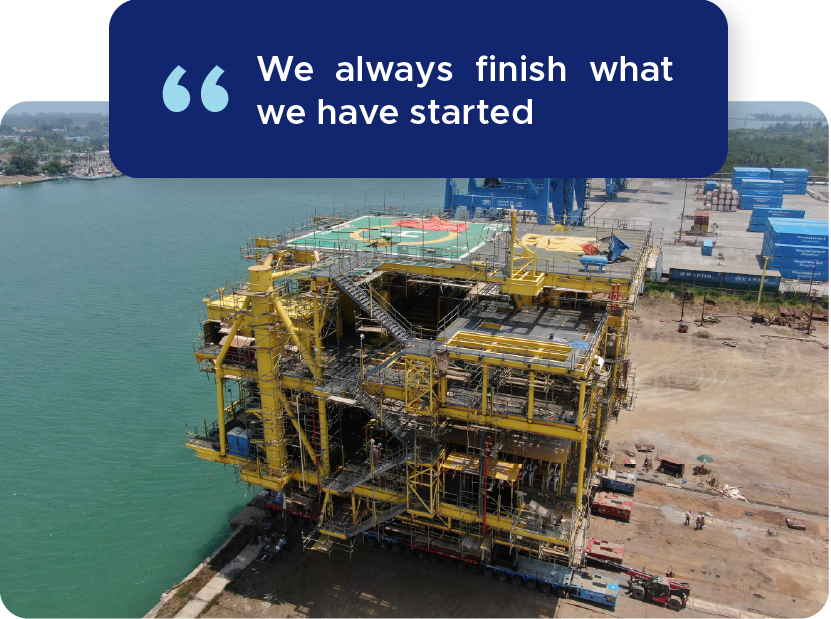
Building construction remained active with favorable prospects, particularly in private projects. In infrastructure, progress continued on railway projects, while pipeline operations maintained a labor‑intensive execution supported by management systems, certifications, and a strong quality culture.
In drilling, the year demonstrated the value of having our own technical platform and an operational excellence model focused on safety, efficiency, and reduced non‑productive time, strengthening integration and reducing reliance on third parties.
In the Materials segment, through Elementia and Fortaleza, 2025 was a year of orderly execution and strategic consolidation. In a more selective construction environment, the segment prioritized operational efficiency, portfolio optimization, and disciplined cost management, supported by well‑recognized brands and a broad regional distribution network. The cement business stood out for its adaptability, enabling margin improvement and sustained profitability. Strategic decisions were made during the year to allocate resources toward higher‑value markets and products, reaffirming a long‑term vision based on industrial scale, financial prudence, and customer proximity.
In Energy, Carso Energy maintained operations with high availability and a clear focus on safety and compliance, while advancing the expansion of strategic gas transportation infrastructure. The development of the Centauro del Norte pipeline represents a significant step toward regional energy integration. In parallel, the segment continued to manage its hydroelectric assets in Panama and to explore geothermal projects in Mexico.
In Hydrocarbons, Zamajal continued consolidating a long‑term platform with a focus on safety, operational discipline, and efficiency. During 2025, progress was achieved in optimizing producing fields, building in‑house technical talent, and advancing strategic projects such as Ixachi under a financed services scheme. With the same approach, technical training was maintained for the development of other relevant portfolio assets.
Regarding sustainability, in 2025 we strengthened the update of key corporate policies and reinforced our focus on safety, compliance, and continuous improvement. We continued to promote well‑being initiatives for employees and their families, along with training and development programs coordinated with the Carlos Slim Foundation, ASUME, and Capacítate para el Empleo, grounded in the conviction that business growth must be accompanied by social value creation and institutional strengthening.
Finally, I would like to thank our shareholders for their continued trust, our customers and suppliers for their collaboration, and especially our employees for their dedication and daily effort. At Grupo Carso, consistency is built through efficiency, culture, focus, execution, and sound principles: working with enthusiasm, caring for our people, and maintaining our vision, with a steadfast commitment to contributing to Mexico’s economic and social development.
Sincerely,
Lic. Carlos Slim Domit
Chairman of the Board of Directors